
Godzilla: The Legendary Icon of Japan and Global Pop Culture
Godzilla (ゴジラ), often called the King of Monsters, is much more than just a movie creature. First appearing on the big screen in 1954, this massive reptilian creature has become a symbol of Japanese and global culture, embodying themes ranging from nuclear destruction to human resilience. With over 30 films, numerous appearances in series, comics, video games, and toys, Godzilla holds a central place in collective imagination and pop culture.
The Origins of Godzilla
Godzilla emerged in a specific historical and social context. In 1954, less than a decade after the atomic bombings of Hiroshima and Nagasaki, Japan was still deeply scarred by the devastation of war and the aftermath of nuclear weapons. This collective trauma directly influenced the creation of Godzilla, a metaphor for the destruction wrought by atomic bombs.
The original film, titled Gojira (ゴジラ) in Japanese, directed by Ishirō Honda and produced by Toho Studios, tells the story of a giant monster awakened by nuclear tests in the Pacific Ocean. The creature ravages everything in its path, echoing the devastation caused by the war. With its radioactive breath and colossal size, Godzilla represents the uncontrollable terror of nuclear power.
Godzilla's design was intended to depict a prehistoric dinosaur with pronounced reptilian features, including rough skin and dorsal plates reminiscent of nuclear explosions. Its enormous size and atomic breath made it a symbol of the dangers of nuclear energy and the catastrophic consequences of human ingenuity.
The first Godzilla film was a massive success in Japan, largely thanks to its innovative special effects for the time, such as the use of "suitmation" (an actor in a monster costume), and its poignant theme that resonated deeply with Japanese audiences.
Godzilla's Evolution Through the Decades
During this period, Godzilla transitioned from a symbol of terror to a benevolent hero. Films in the Showa series (1954-1975) became lighter and were often family-oriented. Godzilla vs. King Ghidorah (1964) introduced the recurring nemesis King Ghidorah, a three-headed dragon, as one of Godzilla’s iconic foes.
In this era, Godzilla became a more sympathetic figure, even protective, fighting to save the world from various threats. This shift reflected the socio-political climate of the time, as fears of nuclear disaster waned and an era of economic prosperity took hold.
In the 1980s, the Godzilla franchise returned to its darker origins with the Heisei series (1984-1995), reestablishing the monster as a destructive force. The Return of Godzilla (1984) ignored the lighter films and marked a serious tone, emphasizing the dangers of the Cold War and global nuclear tensions.
This series also introduced more advanced special effects while retaining the traditional suitmation technique. Ecological and technological themes became prominent, with films like Godzilla vs. Biollante (1989), which explored the dangers of genetic engineering.
The new millennium saw the rise of the Millennium series (1999-2004) and Hollywood adaptations. The 1998 American remake directed by Roland Emmerich received mixed reviews, mainly due to changes in Godzilla’s design and character. However, the 2014 American film simply titled Godzilla garnered far more positive reception, reigniting global interest in the creature.
In 2016, Japan responded with Shin Godzilla, directed by Hideaki Anno and Shinji Higuchi, which returned to the franchise’s dark and political essence. The film won multiple awards and was praised for its critique of bureaucratic responses to crises, echoing the 2011 earthquake and Fukushima nuclear disaster.
Today, the franchise thrives with international collaborations, such as the MonsterVerse, which includes films like Godzilla vs. Kong (2021), another worldwide success.
Godzilla’s Role in Japanese and Global Pop Culture
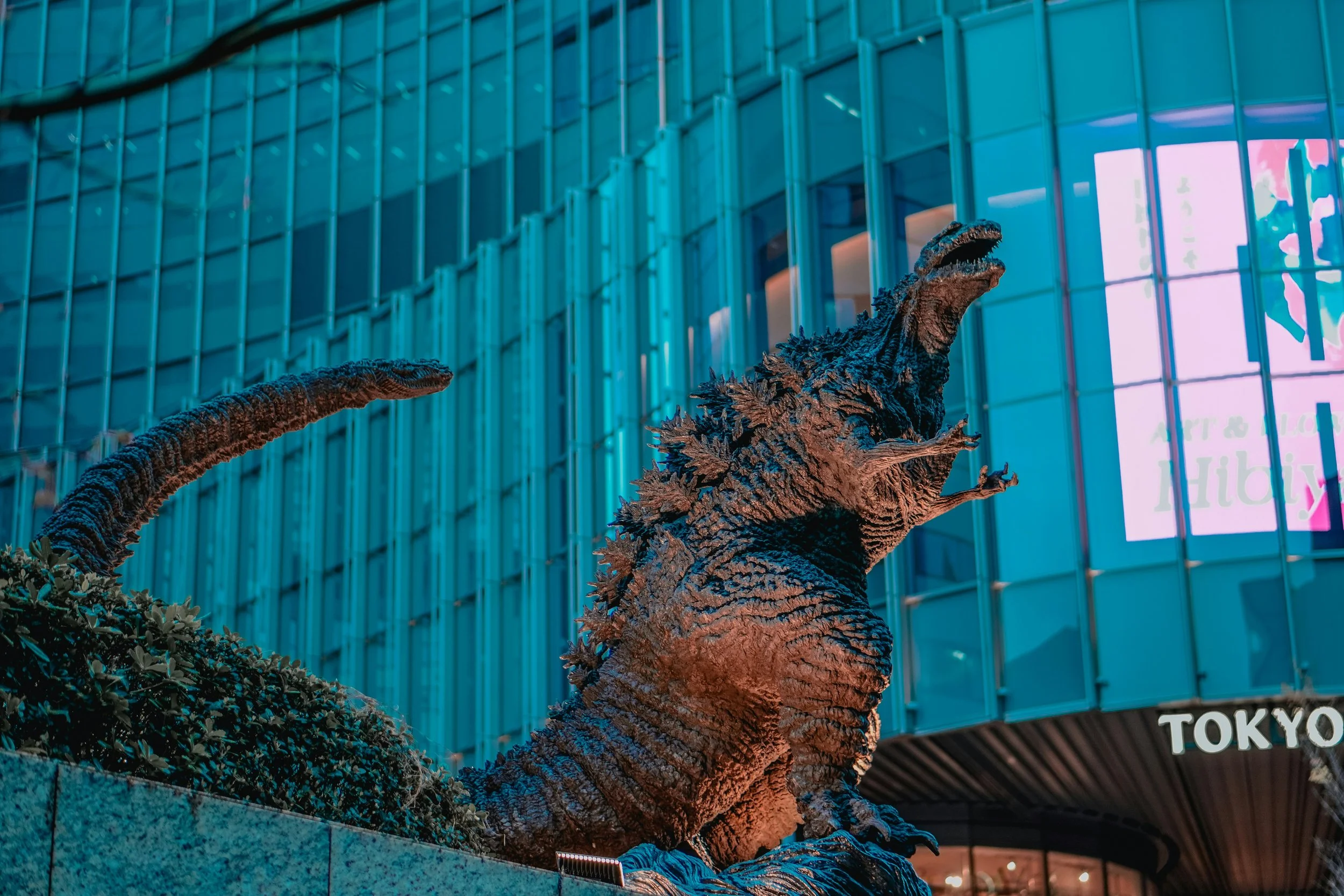
Godzilla holds a unique place in Japanese culture. More than just a movie monster, it has become a national symbol, reflecting Japan’s fears and hopes across different eras. In Tokyo, a giant Godzilla statue stands in the Shinjuku district, and the creature is often regarded as an unofficial mascot of the city.
Globally, Godzilla is one of the most recognizable monsters, influencing countless works of science fiction and fantasy. The kaiju (giant monster) genre took off thanks to Godzilla, inspiring works like Pacific Rim and other monster-centric franchises worldwide.
Beyond cinema, Godzilla has appeared in numerous comics, animated series, video games, and merchandise. From toy collections to theme parks, the monster has become a global cultural phenomenon, beloved by generations of fans of all ages.

The Social and Philosophical Impact of Godzilla
Godzilla is more than entertainment; it is also a reflection on social and environmental issues. From its inception, it has embodied fears about nuclear weapons and the unintended consequences of human technology. Japan’s relationship with this creature mirrors its struggles with environmental hazards, international politics, and natural disasters.
Godzilla is often seen as a metaphor for nature, capable of destruction but also of restoring balance in the face of human excess. This duality is part of its enduring appeal and continues to inspire reflections on humanity’s relationship with its environment.
Conclusion
Godzilla is far more than a giant monster. Since its debut in 1954, it has transcended its status as a cinematic creature to become a true cultural icon in Japan and beyond. Its story reflects the fears, hopes, and challenges of its time, continually evolving to resonate with new generations of filmmakers, artists, and fans. Whether in the streets of Tokyo or on screens worldwide, Godzilla remains the undisputed King of Monsters.