
Rising above the heart of Osaka, Abeno Harukas offers one of the most impressive viewpoints over the city. At 300 metres tall, this skyscraper has become a landmark in Osaka's urban landscape and a place where the city can be discovered from a completely different perspective.
The observation deck, known as Harukas 300, occupies the upper floors of the building and offers spectacular views across Osaka and the surrounding region. Whether visiting during the day, at sunset, or after dark, the experience reveals a city that seems to stretch endlessly towards the horizon.
Osaka from Above
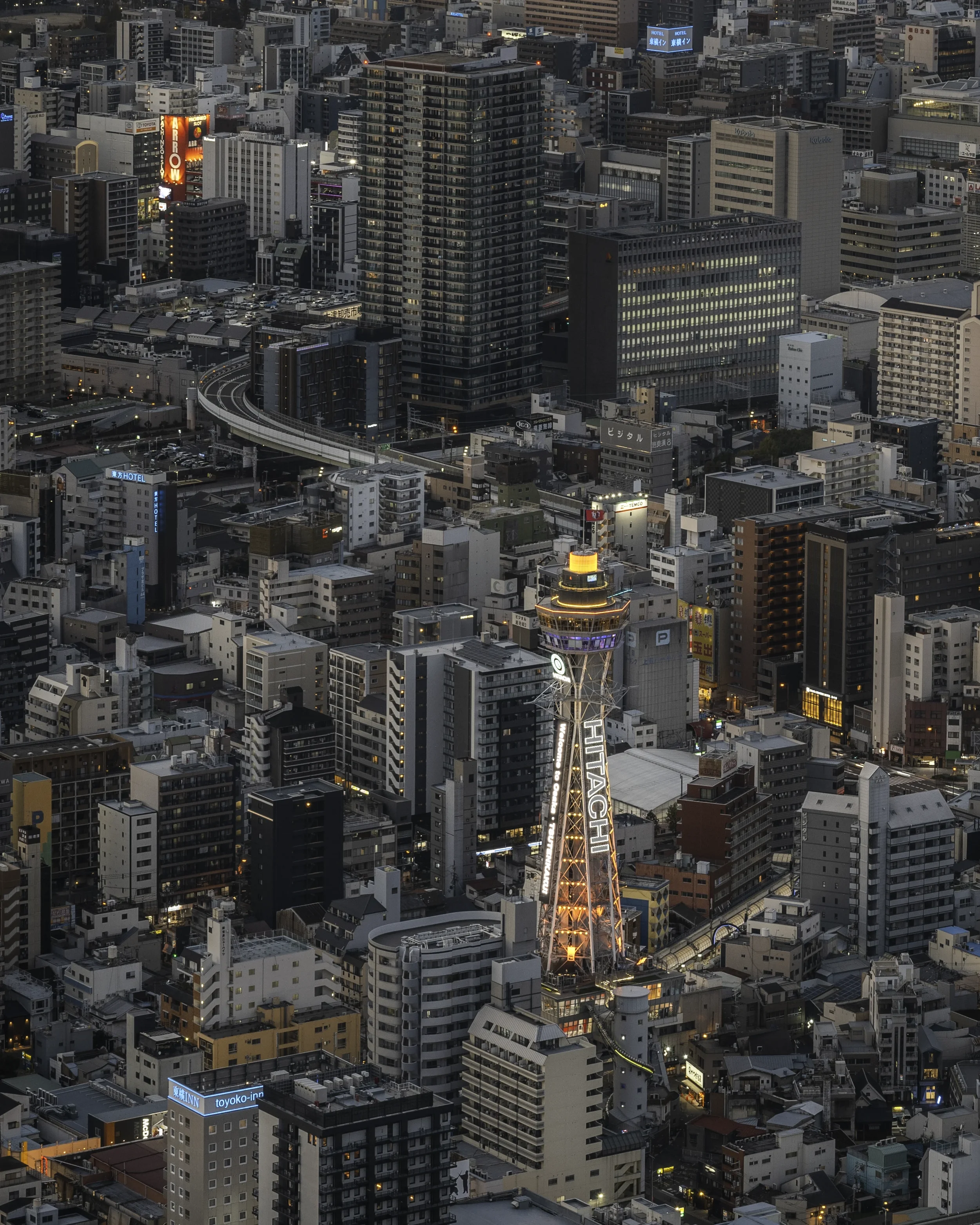
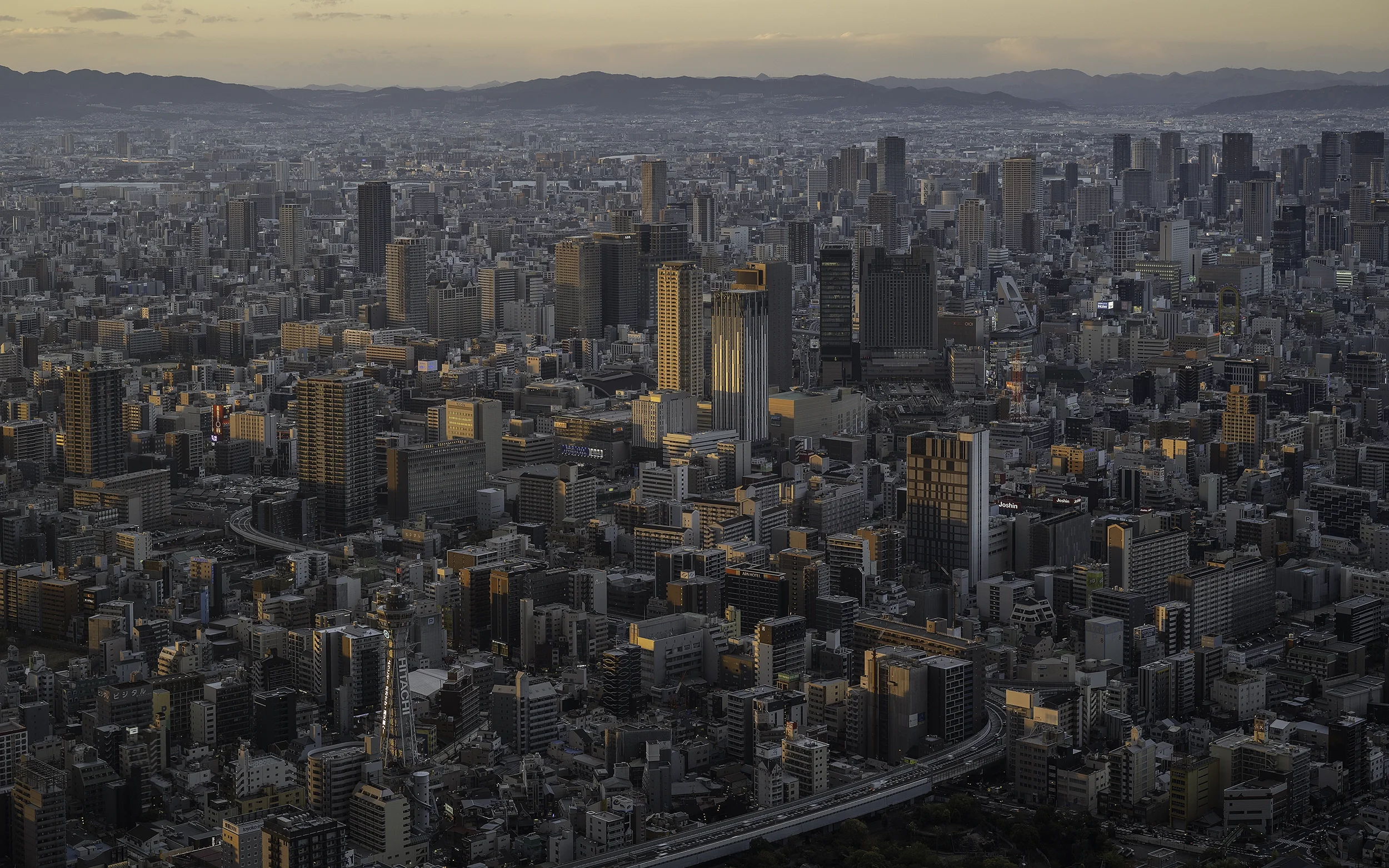
The observatory extends across several floors, with large glass windows providing an almost uninterrupted panorama. From here, Osaka's dense urban landscape unfolds in every direction: railway lines, residential neighbourhoods, commercial districts, distant mountains and, on particularly clear days, the coastline.
One of the most fascinating aspects of the view is simply the scale of the city. Osaka is a vast metropolis, and from above, its urban structure becomes much easier to appreciate. The contrast between the densely built-up areas and the mountains surrounding the region creates an interesting landscape that changes considerably depending on the direction you look.
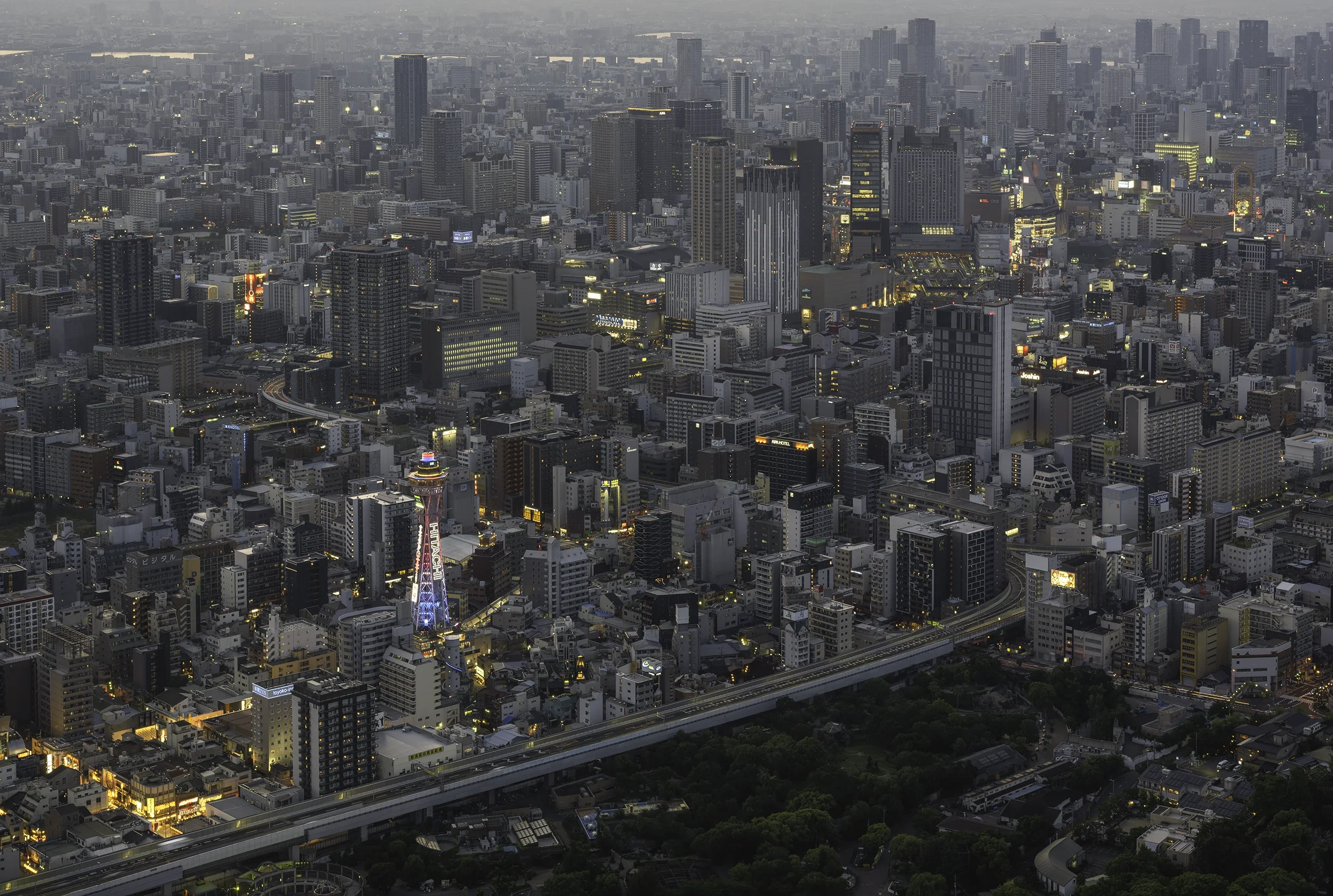
The observation deck is particularly enjoyable towards the end of the day, when the light becomes softer and the city begins to transition from daylight into darkness. Watching Osaka gradually illuminate is one of the highlights of a visit to Harukas 300.
A Place to Photograph Osaka
For photographers, Harukas 300 offers a different way to explore Osaka. Rather than photographing the streets from ground level, the elevated viewpoint allows you to discover the city's geometry, its layers of buildings and the patterns created by roads and railway infrastructure.
The enormous windows provide opportunities to photograph the city in different lighting conditions. During the day, distant mountains and the surrounding landscape can become part of the composition. In the evening, the illuminated city creates a completely different atmosphere, with countless lights spreading across the urban horizon.
Although photographing through glass can sometimes present challenges, particularly with reflections, the observation deck offers plenty of opportunities to experiment with compositions and explore Osaka from an unusual perspective.
Tripods are permitted, which is particularly useful for night photography and long exposures. However, visitors should be careful not to obstruct other people, especially in the busier areas of the observatory.
I particularly enjoy viewpoints that allow me to step back from the usual street-level photography and observe the structure of a city as a whole. Harukas 300 is one of those places where spending time simply looking around can be just as rewarding as taking photographs.
More Than Just a Viewpoint
The observation deck also includes the Sky Garden, an open-air space on the 58th floor where visitors can take a break and enjoy the atmosphere. The combination of indoor viewing areas and open spaces makes the experience more pleasant than simply walking around a conventional observation deck.
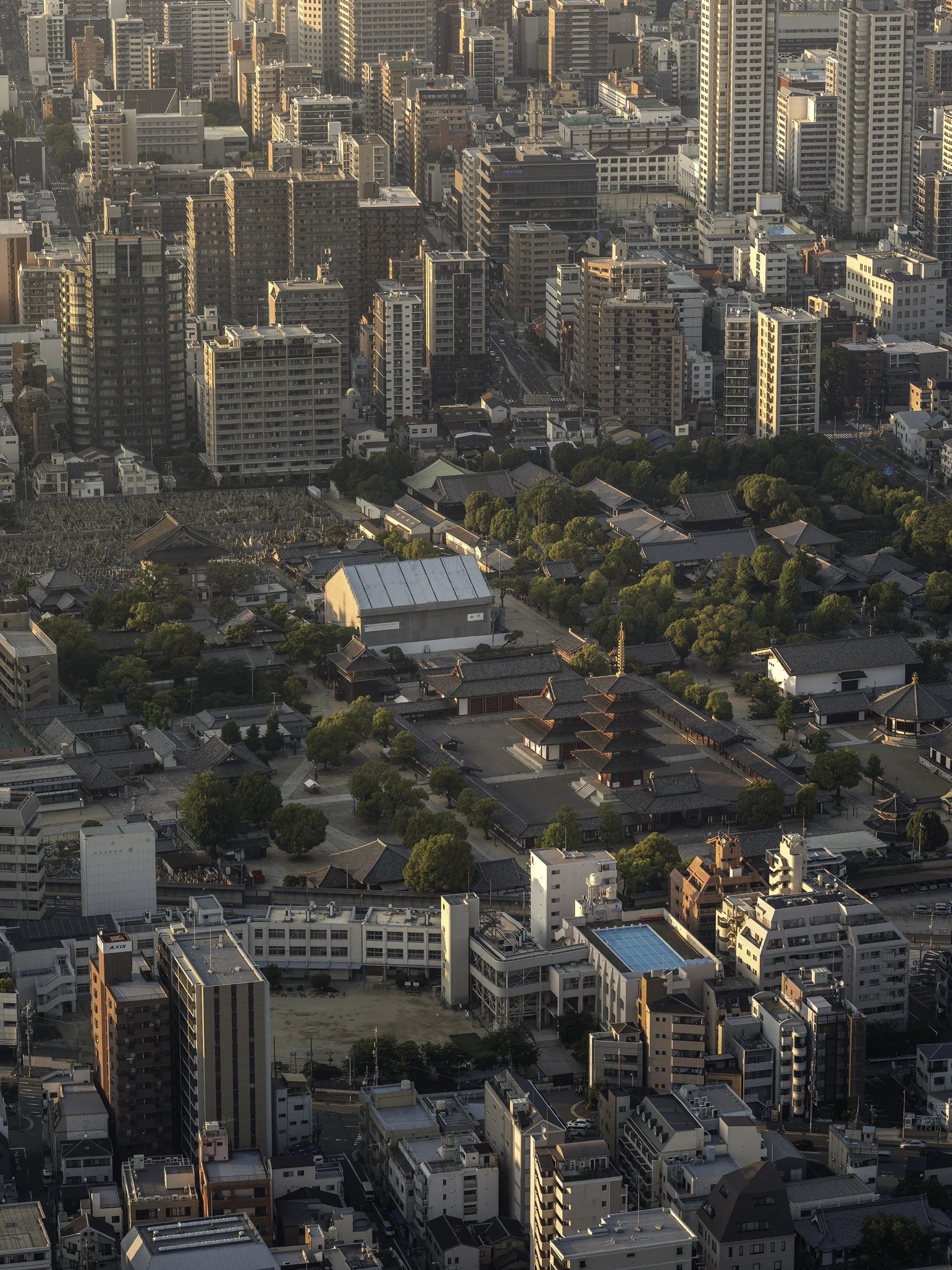
Abeno Harukas is also conveniently located in the Tennoji area, making it easy to combine a visit with a walk through the surrounding neighbourhoods. The lively streets of Shinsekai, Tennoji Park and the traditional atmosphere of the area offer an interesting contrast to the modern architecture of the skyscraper itself.
Visiting Harukas 300
Located directly above Tennoji Station, Abeno Harukas is easy to reach by public transportation and can be conveniently included in a day exploring southern Osaka.
The observatory is particularly worth considering on a clear day, when visibility allows you to appreciate the full extent of the surrounding landscape. However, an evening visit can also be rewarding, especially if you enjoy photographing city lights and urban landscapes.
Harukas 300 is an excellent place to discover Osaka from above, offering a perspective that is quite different from exploring its streets and neighbourhoods. For visitors interested in architecture, city landscapes or photography, it is a viewpoint worth taking the time to experience.