
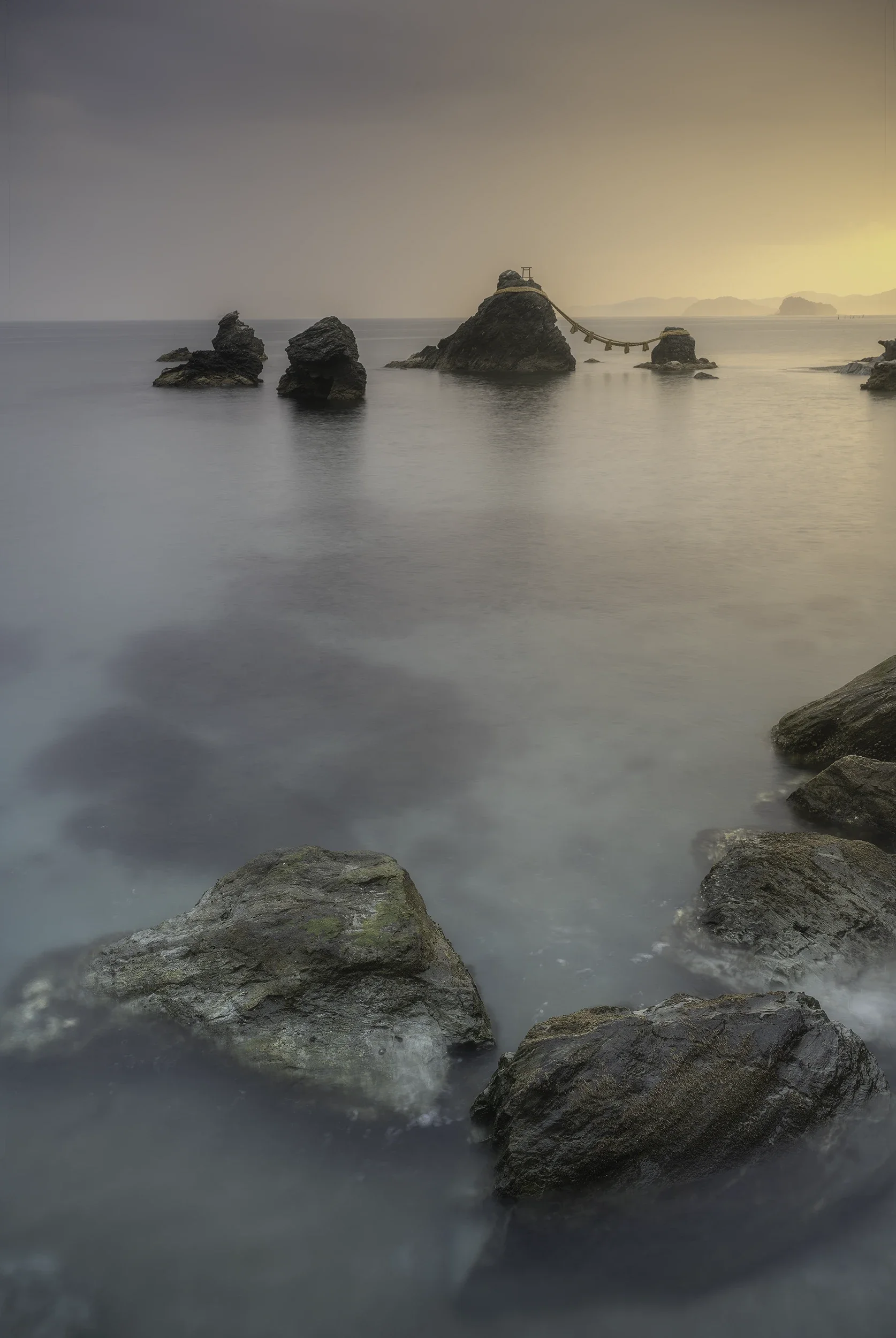
The Meoto Iwa, also known as the Married Rocks, are a sacred rock formation located on the coast of the sea in Futami, Mie Prefecture, Japan. These two rocks symbolize the union between man and woman, also representing the harmony between Shinto deities. This iconic site attracts many visitors annually seeking spirituality and breathtaking landscapes. In addition to the Married Rocks, the area is rich with temples, shrines, and natural wonders, offering a unique cultural and spiritual experience.
The History of Meoto Iwa
Meoto Iwa (夫婦岩), meaning "husband and wife rocks," is deeply rooted in Shinto traditions, the native religion of Japan. The rocks are often associated with devotion to Shinto deities, particularly the divine couple Izanagi and Izanami, who, according to Japanese mythology, created the islands of Japan and its deities. The two rocks symbolize the harmonious and eternal union of these deities, extending to represent marital harmony among humans.
These two formations are connected by a sacred rice straw rope called shimenawa, approximately 35 meters long and weighing nearly a ton. The shimenawa is replaced several times a year in a special ceremony, reflecting the site's significant religious importance. According to beliefs, this rope prevents impure spirits from entering sacred spaces.
The larger rock, representing the husband, stands about 9 meters tall, while the smaller rock, symbolizing the wife, is approximately 4 meters high. At high tide, the rocks appear to float on the water, creating a spectacular natural scene, particularly beautiful at sunrise when the sun rises behind the rocks.
A Visit to Futami Okitama Shrine
The Meoto Iwa are located near Futami Okitama Shrine, a Shinto place of worship close to the rocks. This shrine is dedicated to Sarutahiko Ōkami, a protective deity associated with light and crossroads. Traditionally, pilgrims visiting the nearby Grand Shrine of Ise would first come to Futami Okitama for purification by performing a ritual called misogi. This purification involved bathing in the sea near the rocks to symbolically cleanse oneself of impurities.
The shrine is also known for its small frog statues called Kaeru. In Japanese, kaeru means both "frog" and "return," symbolically ensuring safe returns from travels. These frogs are regarded as good luck charms.
The Best Times to Visit Meoto Iwa
The Meoto Iwa can be visited year-round, but certain times offer particularly memorable experiences.
One of the most spectacular times to view the Meoto Iwa is at sunrise, especially in summer, when the sun appears to rise directly behind the rocks, creating a breathtaking scene. If you visit between May and July, you might see the sun rise directly between the two rocks, a spiritually significant moment for many believers.
Full moon nights, particularly during the summer months, are also a prime time to visit. The moon rises behind the rocks, casting a magical light play on the water.
Annual ceremonies are held on May 5, September 5, and during the summer solstice, when the shimenawa rope is replaced. These events attract devotees who pray for prosperity and family harmony.
Other Attractions Around Meoto Iwa
Besides the Married Rocks and Futami Okitama Shrine, the Futami area and Mie Prefecture offer other fascinating sites to explore.
Located about 20 kilometers from the Meoto Iwa, the Ise Grand Shrine is one of Japan's most revered Shinto shrines. Considered the home of the sun goddess Amaterasu Omikami, it attracts millions of pilgrims each year. Ise Jingu consists of two main shrines: the Inner Shrine (Naiku) and the Outer Shrine (Geku), surrounded by ancient forests and pristine rivers. Visiting this shrine provides a deep spiritual immersion into one of Japan's oldest traditions.
Nearby is Ise-Shima National Park, a coastal region known for its natural landscapes and biodiversity. The park features numerous bays, islands, and mountains, offering opportunities for hiking, boat rides, and marine wildlife observation. One of the highlights is Kashikojima Island, famous for its pearl farms.
To learn about the history of pearl farming in Japan, visit Mikimoto Pearl Island near the Meoto Iwa. The island is dedicated to Mikimoto Kokichi, who cultivated the world's first cultured pearls in 1893. You can witness demonstrations by Ama divers, who traditionally harvested pearl oysters by hand.
For families, Toba Aquarium is an excellent activity after exploring the spiritual sites. The aquarium hosts a wide variety of marine species, including dugongs, tropical fish, and sea lions.
How to Access Meoto Iwa
The Meoto Iwa are located in Futami, Mie Prefecture, and are easily accessible by public transport.
• From Tokyo Station: Take the Shinkansen bullet train to Nagoya Station (about 1 hour 40 minutes), then transfer to the JR Kintetsu Line or Rapid Mie Line to Futaminoura Station (about 90 minutes).
• From Kyoto: Take the Shinkansen to Nagoya (about 35 minutes), then transfer to the JR Kintetsu Line to Futaminoura.
From Futaminoura Station, the Meoto Iwa are a 15-minute walk or a short taxi ride away.
Conclusion
The Meoto Iwa are far more than a simple geological curiosity. They embody a strong spiritual connection between humans and Shinto deities. For travelers seeking serenity, stunning landscapes, or a unique cultural experience, a visit to the Meoto Iwa and the surrounding sites offers a perfect blend of spirituality and natural beauty. Whether at sunrise, during sacred ceremonies, or while exploring nearby shrines, this sacred site is sure to captivate any curious traveler.
Location: