
Magome-juku: A Journey into Japan's Historical Heart
Magome-juku (馬籠宿) is a historic post town nestled in the Kiso Valley along the famous Nakasendo Trail, which connected Kyoto to Edo (modern-day Tokyo) during the Edo period (1603-1868). Located in the mountainous Gifu Prefecture, Magome-juku is a charming spot where time seems to stand still, offering visitors an authentic glimpse into feudal Japan. With its cobblestone streets lined with traditional houses, this picturesque village is a must-visit destination for history buffs, nature lovers, and fans of Japanese culture.
The History of Magome-juku
During the Edo period, Japan was under the rule of the Tokugawa shoguns, who established a network of roads known as the Gokaido (Five Major Routes) to facilitate travel across the country. Among these, the Nakasendo, meaning "Central Mountain Route," spanned approximately 530 km between Kyoto and Edo. It was primarily used by daimyo (feudal lords), merchants, and travelers.
Scattered along the Nakasendo were shukuba or post towns, where travelers could rest, dine, and spend the night. Magome-juku was one of these 69 stations, strategically located in the mountains for those traversing the Kiso Valley.
Magome-juku thrived as a bustling post town, serving numerous travelers daily. The village offered inns, restaurants, and shops where merchants sold local goods like woodcrafts and pottery. However, over the centuries, the advent of modern transportation such as railways caused the decline of post towns. Magome-juku gradually lost its economic and demographic importance. It wasn’t until the 1960s that the village was restored to preserve its historical heritage. Today, Magome-juku draws thousands of visitors eager to explore this authentic slice of Japan's past.
Exploring Magome-juku: A Journey Back in Time
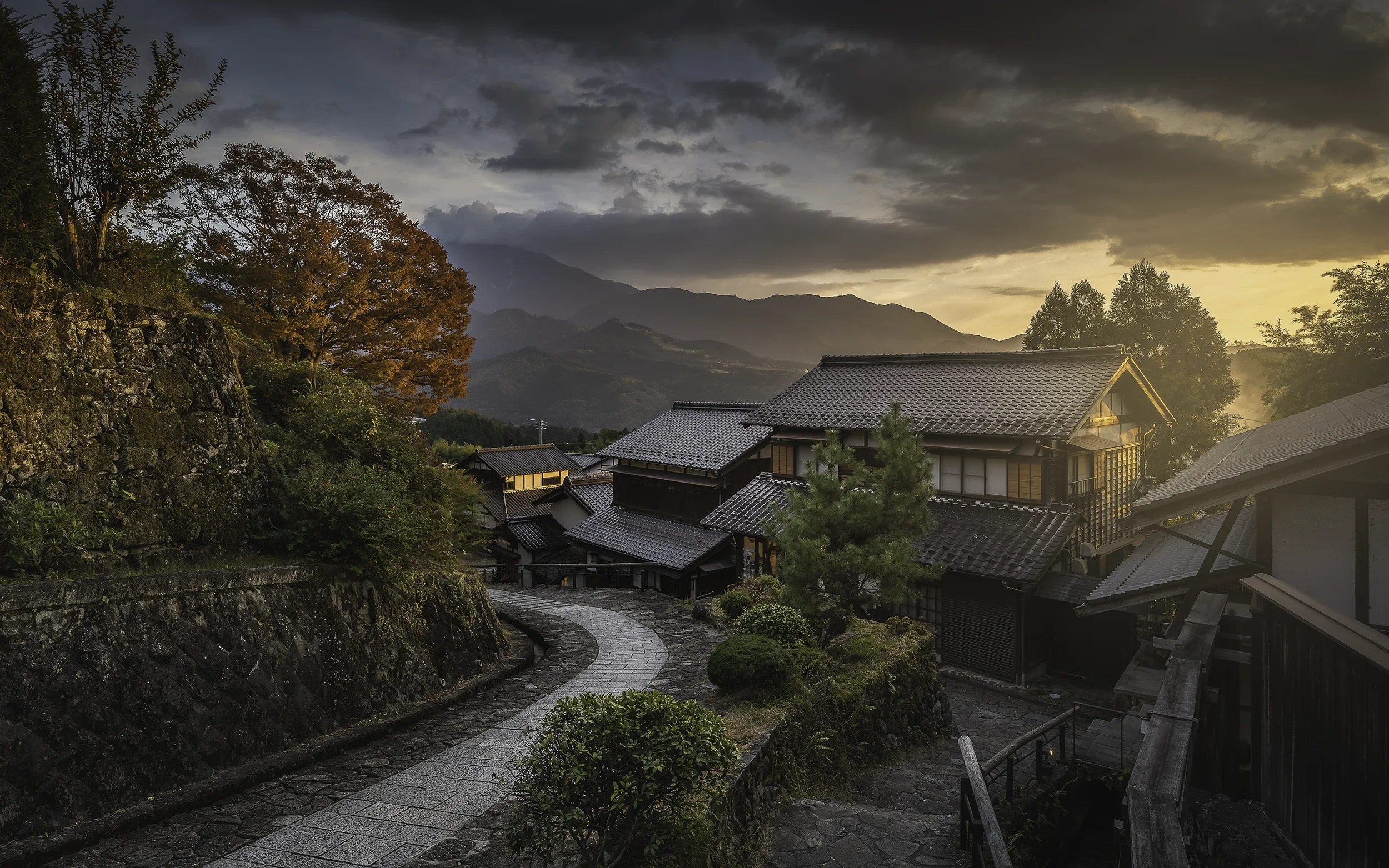
Magome-juku has managed to retain its historical charm. Strolling through its cobblestone streets, visitors are transported to a bygone era, surrounded by wooden buildings, historical inns, and artisan shops. Here are some highlights to explore during your visit:
• The Main Street
The main street of Magome-juku gently ascends through the village and is lined with traditional buildings. These Edo-style houses, reconstructed to maintain historical accuracy, now serve as inns, museums, souvenir shops, and cafés. The dark wooden architecture, tiled roofs, and rice paper windows offer an authentic glimpse into old Japan.
• The Honjin
Near the main street lies the Honjin, the primary inn of Magome-juku, once reserved for nobles and high-ranking samurai. Now a museum, it provides a fascinating look into daily life during the Edo period. Visitors can view ancient artifacts, samurai armor, and recreated luxurious guest rooms.
• Toson Shimazaki's Birthplace
Magome is also famous as the birthplace of Toson Shimazaki, an influential Japanese writer from the early 20th century. His childhood home has been transformed into a museum dedicated to his life and works. Shimazaki is best known for his novel Before the Dawn (Yoake Mae), which portrays the lives of Kiso Valley residents during the transition from the Edo to Meiji periods.
• Scenic Views
Surrounded by the Japanese countryside, Magome-juku offers breathtaking views of the nearby mountains, particularly Mount Ena. As you walk along the cobbled paths, you’ll encounter stunning panoramas of forests, terraced rice fields, and rolling hills. The natural beauty of the area is especially captivating in autumn when the maple trees blaze with vibrant colors.
Hiking from Magome to Tsumago
One of the most popular activities for visitors to Magome-juku is hiking the trail to Tsumago, another post town located about 8 kilometers away. This route, following a section of the old Nakasendo Trail, meanders through forests, rivers, and quaint villages.
The hike is relatively easy, with a few uphill stretches, and takes about two to three hours. Along the way, you’ll find points of interest such as waterfalls and shrines. The trail is well-marked, with signs in Japanese and English to guide you.
Tsumago is one of the best-preserved post towns in Japan. Less touristy than Magome, it offers a quieter and more authentic atmosphere. In Tsumago, you can visit traditional houses, historical inns, and ancient temples. The trail between Magome and Tsumago is particularly enchanting in spring when cherry blossoms add a magical touch to the scenery.
How to Get to Magome-juku
• From Tokyo:
Take the Tokaido Shinkansen from Tokyo to Nagoya (approximately 1 hour and 40 minutes). From Nagoya, transfer to the JR Chuo Line to Nakatsugawa (about 50 minutes).
From Nakatsugawa, a local bus runs to Magome-juku, taking about 30 minutes.
• From Kyoto or Osaka:
The Tokaido Shinkansen connects Kyoto or Osaka to Nagoya in about 40 minutes from Kyoto and 1 hour from Osaka. From Nagoya, follow the same route via the JR Chuo Line and local bus to Nakatsugawa.
Prices and Hours
Access to Magome-juku is free, but some attractions, such as the Honjin and Toson Shimazaki’s house, require an entry fee of around 300 to 500 yen. Local buses operate regularly throughout the day, but it’s advisable to check schedules in advance, as they may run less frequently during off-peak seasons.
• Best Times to Visit:
Spring (April-May) and autumn (October-November) are the ideal seasons to visit Magome-juku, as the surrounding nature is at its most beautiful.
• Footwear:
Since Magome is in the mountains, the main street is on an incline. Comfortable walking shoes are essential, especially if you plan to hike to Tsumago.
• Clothing:
Due to its elevated location, Magome can be cooler than the plains. Bring a light jacket even in summer, and pack a raincoat in case of rain.
Conclusion
Magome-juku is much more than just a tourist stop. It is a gateway to Japan's feudal history and a destination that perfectly balances culture, nature, and adventure. Whether you are a history enthusiast, a hiking aficionado, or simply seeking a picturesque escape from bustling cities, Magome-juku will transport you to a different time, where stunning landscapes intertwine with the spirit of old Japan.
Location: