
Omamori are traditional Japanese amulets sold at Buddhist temples and Shinto shrines. They are used to attract good fortune, ward off evil, or bring success in various aspects of life. These sacred objects are deeply rooted in Japanese culture and continue to hold a significant place in the daily lives of the Japanese people.
History of Omamori
Omamori trace their origins to Japan’s ancient religious traditions, particularly Shintoism and Buddhism. The word "omamori" derives from the Japanese verb mamoru, meaning "to protect" or "to guard." Originally, these amulets served as talismans to ward off malevolent spirits and invoke blessings from the kami (Shinto deities) or Buddhas.
Early forms of Omamori often consisted of natural objects such as stones, wood, or pieces of paper bearing sacred inscriptions. These items were blessed by priests and carried by believers for protection. Over time, Omamori evolved into the amulets we know today, typically encased in colorful fabric pouches with a small inscription or prayer inside.
As centuries passed, the popularity of Omamori grew, spreading across Japanese society. They became common items, given during religious ceremonies, festivals, or simply purchased for oneself or a loved one.
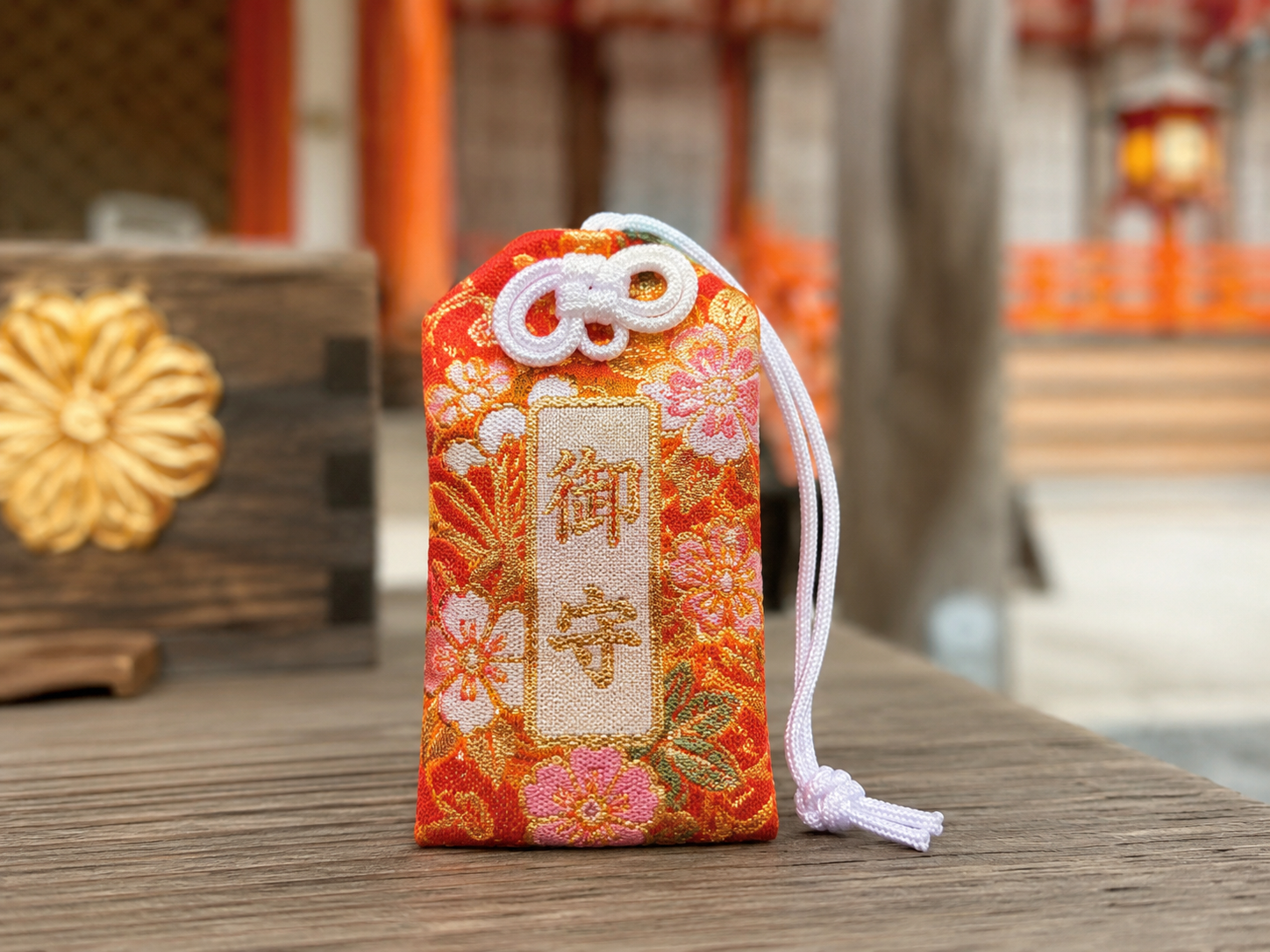
Characteristics of Omamori
Omamori are relatively simple in appearance but imbued with profound spiritual meaning. They generally consist of three main components: the sacred prayer or inscription, the fabric pouch, and the cord.
• The Sacred Prayer or Inscription
Inside each Omamori is a small prayer or sacred text written on paper or wood. This inscription is blessed by a priest or monk before being sealed inside the pouch. The prayer may be dedicated to a specific deity or tailored to address a particular need, such as health, academic success, or travel safety.
• The Fabric Pouch
The pouch enclosing the inscription is often richly decorated with traditional patterns and vibrant colors. These motifs may include religious symbols, flowers, or images related to the shrine or temple where the Omamori was purchased. The pouch is carefully sewn to seal the prayer inside, and opening it is generally discouraged as it may nullify the blessing.
• The Cord
Many Omamori include a small cord for attaching them to personal items such as bags, keys, or even car rearview mirrors. The cord typically matches the pouch’s design and adds a practical touch to the amulet.
Omamori come in various shapes and sizes, depending on the type of protection or blessing they offer. There are Omamori for health, prosperity, academic success, travel safety, and many other purposes. Some temples and shrines also create special Omamori for specific occasions, such as weddings or births.
Cultural Aspect and Influence on Pop Culture
Omamori hold an important place in Japanese culture, not just as religious objects but also as symbols of protection and luck. Their popularity extends far beyond religious practitioners, reaching a broad segment of Japanese society, including younger generations and foreign tourists.
For many Japanese, Omamori are more than mere lucky charms; they represent a tangible connection to the deities and a source of comfort during challenging times. Gifting an Omamori to a friend or family member is a gesture of kindness and protection, expressing support and wishes for their safety and prosperity.
As Japanese society has evolved, Omamori have adapted to modern needs. Today, there are Omamori for highly contemporary concerns, such as car accidents, online safety, and even success in video games. These modern Omamori demonstrate how this ancient tradition continues to adapt and remain relevant in a rapidly changing world.
Additionally, the rise of manga and anime has brought Omamori into Japanese pop culture. They frequently appear in stories, where characters use them as symbols of protection or hope. For instance, in the manga and anime series Naruto, one of the main characters carries an Omamori given by a loved one, symbolizing their desire for his safety and success.
Omamori have also become collectible items for foreign tourists, who see them as authentic and meaningful souvenirs of their visit to Japan. Many temples and shrines offer Omamori specifically designed for visitors, featuring unique patterns or inscriptions in English to meet international demand.
During specific seasons or events, some temples and shrines produce limited-edition Omamori. These special items, often adorned with seasonal motifs or associated with particular deities, are highly sought after by collectors. For example, Omamori distributed during the New Year—when many Japanese visit temples to pray for the year ahead—are especially popular.
Evolution and Future of Omamori
Despite their long history, Omamori continue to evolve to stay relevant in modern society. The use of contemporary materials, the creation of personalized designs, and adaptation to modern needs showcase how this ancient tradition remains vibrant.
However, this evolution raises questions about the commercialization of Omamori. Some traditionalists worry that their spiritual value may be diluted as they become fashion items or consumer goods. Temples and shrines face the challenge of balancing the preservation of traditions with catering to the expectations of a modern audience.
Omamori represent a unique synthesis of religion, culture, and Japanese tradition. They are a testament to how religious practices can evolve while maintaining their spiritual essence. Whether used for protection, expressing good wishes, or simply as souvenirs, Omamori continue to hold a special place in the hearts of Japanese people and international visitors alike.
Conclusion
Omamori are far more than simple amulets; they are a reflection of a millennia-old tradition that thrives in modern Japan. Their ability to evolve while retaining their spiritual significance makes them a powerful symbol of Japanese culture. In a world where traditions are constantly redefined, Omamori remain a tangible link between past and present, sacred and secular. Whether to attract good fortune, provide protection, or honor tradition, Omamori continue to inspire and comfort, maintaining their role in the daily lives of both Japanese people and visitors worldwide.