
Nijo Castle — The Architecture of Power in the Heart of Kyoto
A Note for Travelers Planning to Visit Nijo Castle
If you plan to visit Nijo Castle, you should know that photography is normally prohibited inside Ninomaru Palace in order to preserve its exceptional paintings and interiors.
The photographs illustrating the interior of this article were taken with the kind permission of Nijo Castle. We are sincerely grateful to the castle administration for granting us exclusive access before opening hours, allowing us to document these remarkable spaces while respecting this unique cultural heritage.
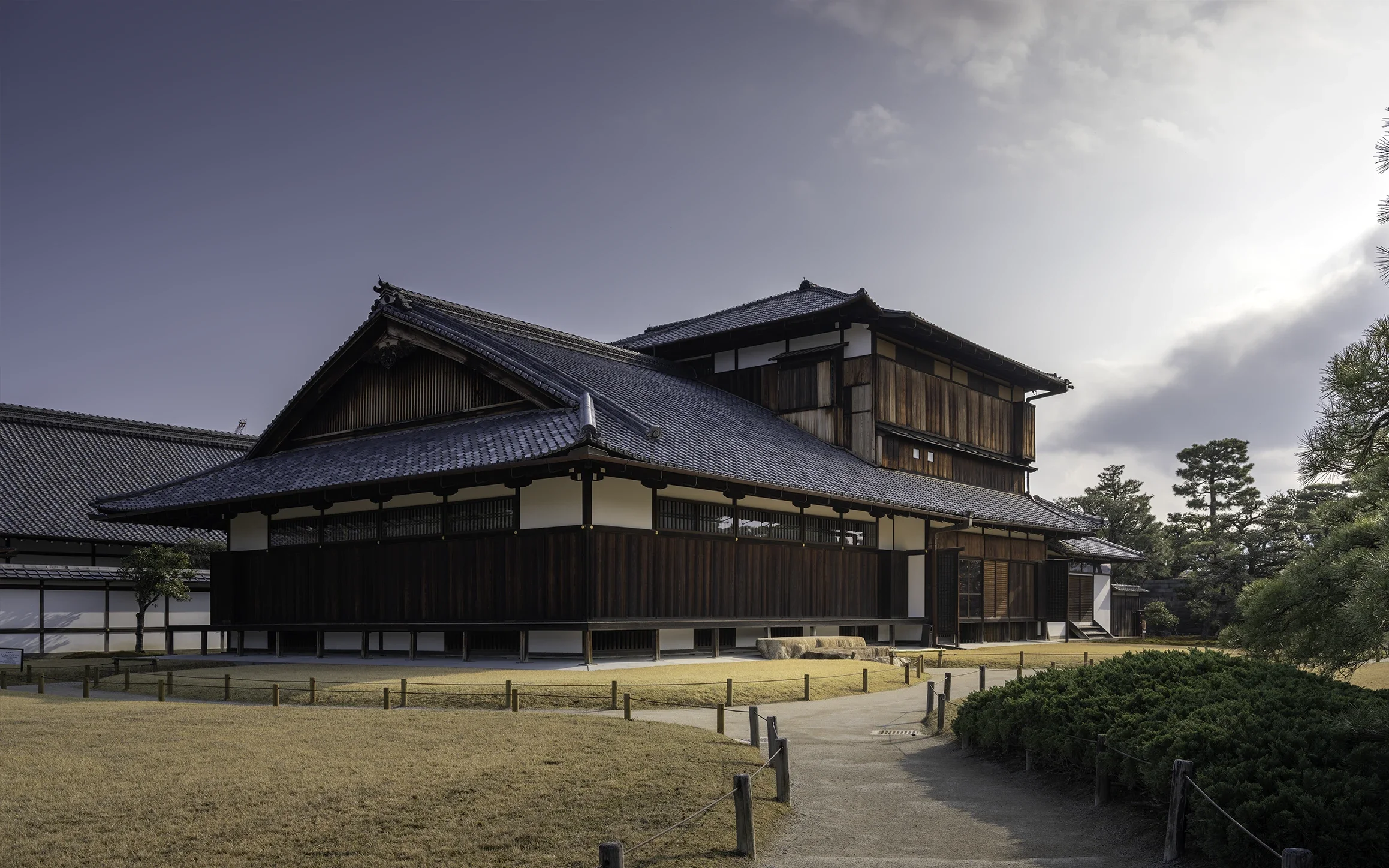
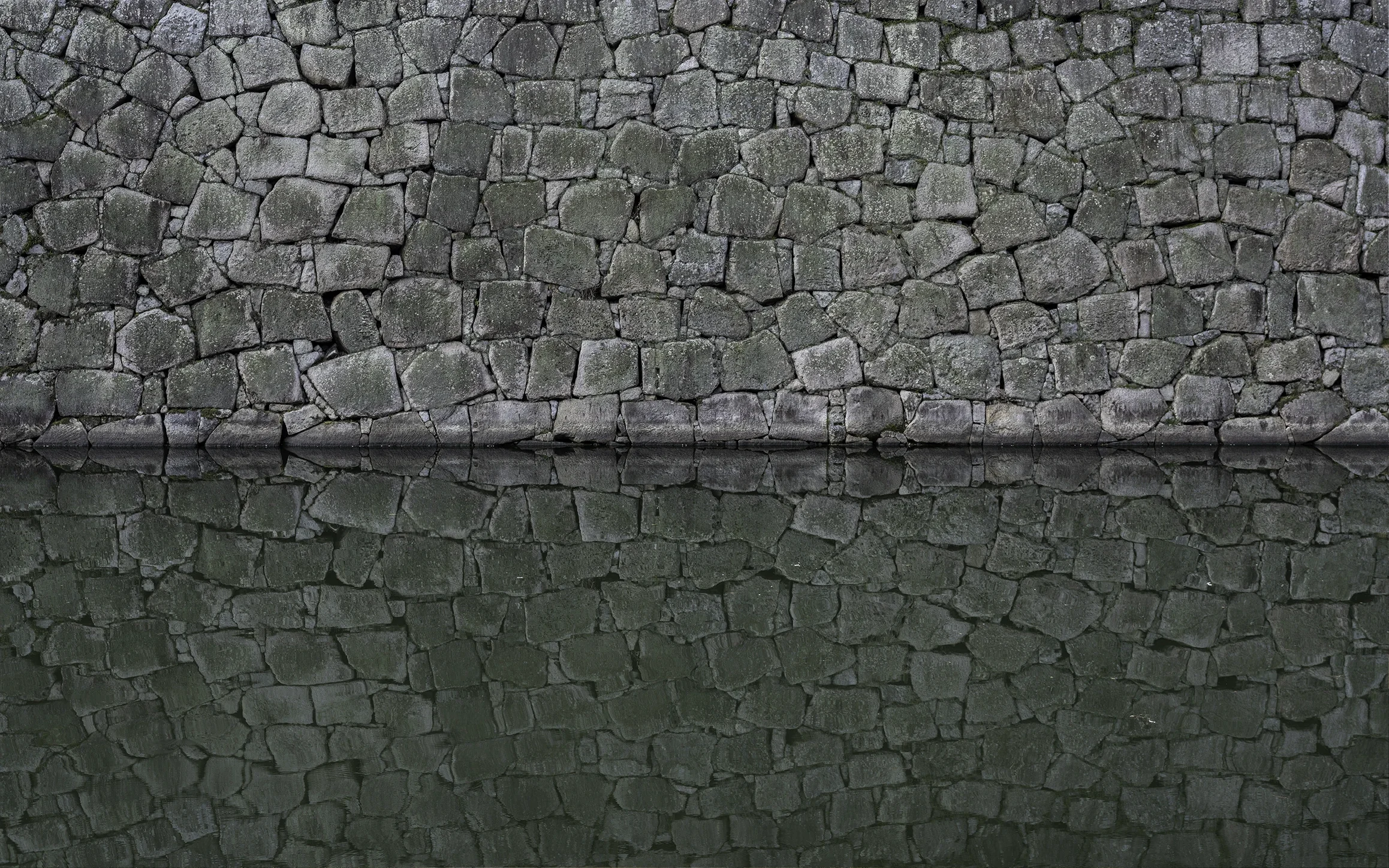
In the heart of Kyoto, just a few minutes from the Imperial Palace, lies a vast complex of stone walls, moats, and elegant wooden buildings: Nijo Castle. At first glance, it might appear to be one of Japan's many historic castles. Yet unlike Himeji or Matsumoto, Nijo was never intended to serve primarily as a military fortress.
Instead, it was built as a stage for political authority—a carefully designed residence that projected the power of the shogun in the very city where the emperor and the imperial court still resided.
Constructed at the beginning of the 17th century by Tokugawa Ieyasu, founder of the Tokugawa Shogunate, Nijo Castle symbolized the presence of military rule in what remained Japan's cultural and imperial capital. For more than two centuries, it served as the official Kyoto residence of successive Tokugawa shoguns.
Today, as a UNESCO World Heritage Site, Nijo Castle stands as one of the finest surviving examples of Edo-period architecture, where buildings, gardens, and decorative arts together tell the story of a government whose authority was intended to be both refined and unquestionable.
The Birth of a Political Castle
Construction of Nijo Castle began in 1601, only a year after Tokugawa Ieyasu's decisive victory at the Battle of Sekigahara in 1600. That battle brought an end to more than a century of civil war and paved the way for over 260 years of peace under Tokugawa rule.
In 1603, Ieyasu was officially appointed shogun by the emperor, establishing the military government that would rule Japan until 1867.
Although Edo—modern-day Tokyo—became the political capital of the shogunate, Kyoto remained the symbolic seat of imperial authority. Nijo Castle was therefore designed both as an official residence for the shogun during visits to Kyoto and as a visible reminder of the country's new political order.
The message was unmistakable: the emperor continued to reside in Kyoto, but real political power now belonged to the shogun.
To build the castle, Tokugawa Ieyasu required numerous feudal lords (daimyō) to contribute labor and resources. This common practice not only accelerated construction but also prevented powerful regional lords from accumulating excessive wealth or military strength.
From its very beginning, Nijo Castle embodied the new political order established by the Tokugawa family.
Ninomaru Palace: Staging Political Power
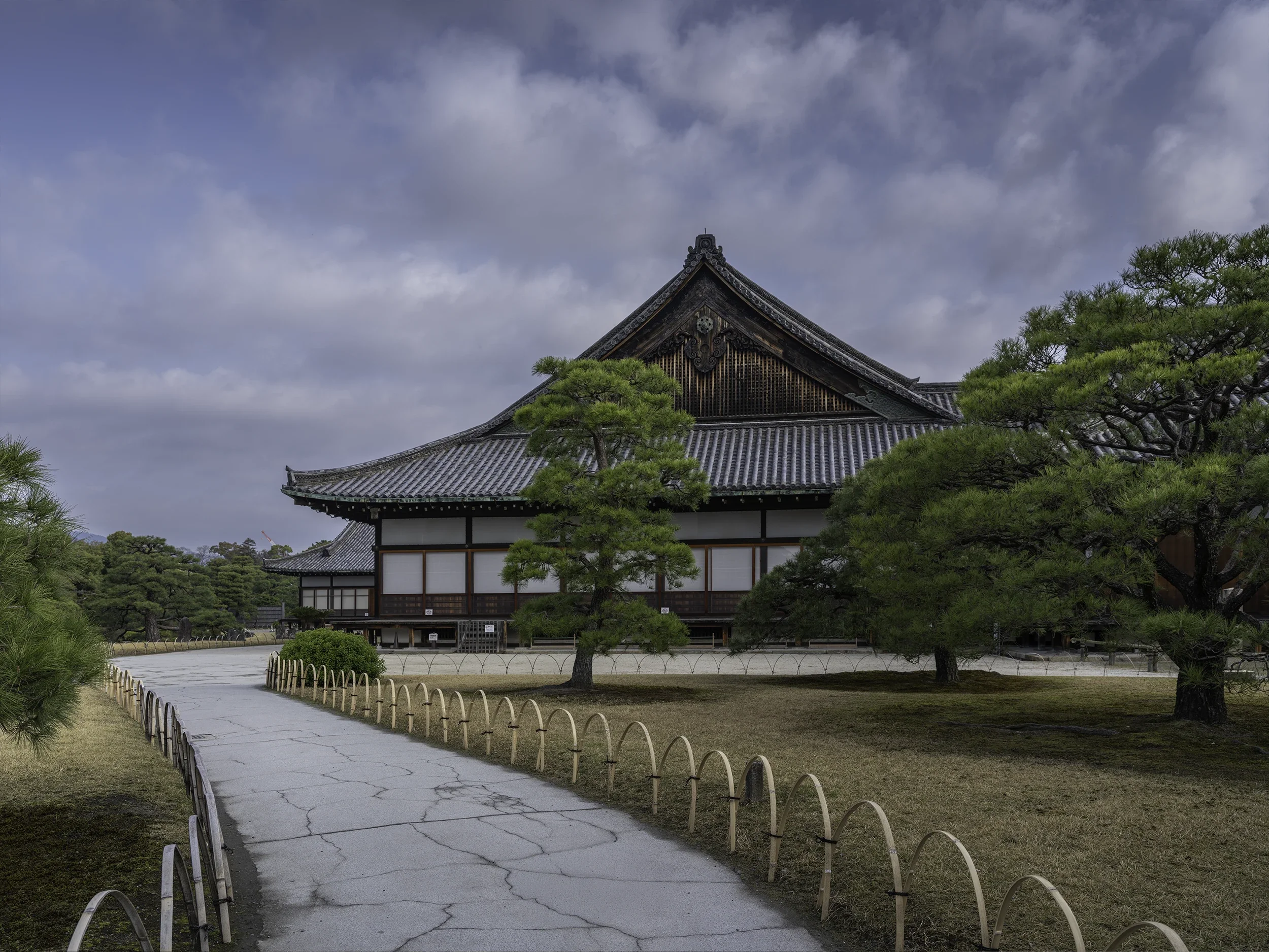
The heart of the castle is Ninomaru Palace, a remarkable complex of interconnected wooden buildings linked by covered corridors that wind around beautifully landscaped gardens.
Rather than serving as a private residence, the palace functioned primarily as a ceremonial space where feudal lords were received according to an exceptionally strict protocol.
The architecture itself reinforces this hierarchy.
Visitors moved through a carefully arranged sequence of reception rooms, each representing a different level of proximity to the shogun. The higher a guest's status, the closer they were permitted to approach the innermost chambers.
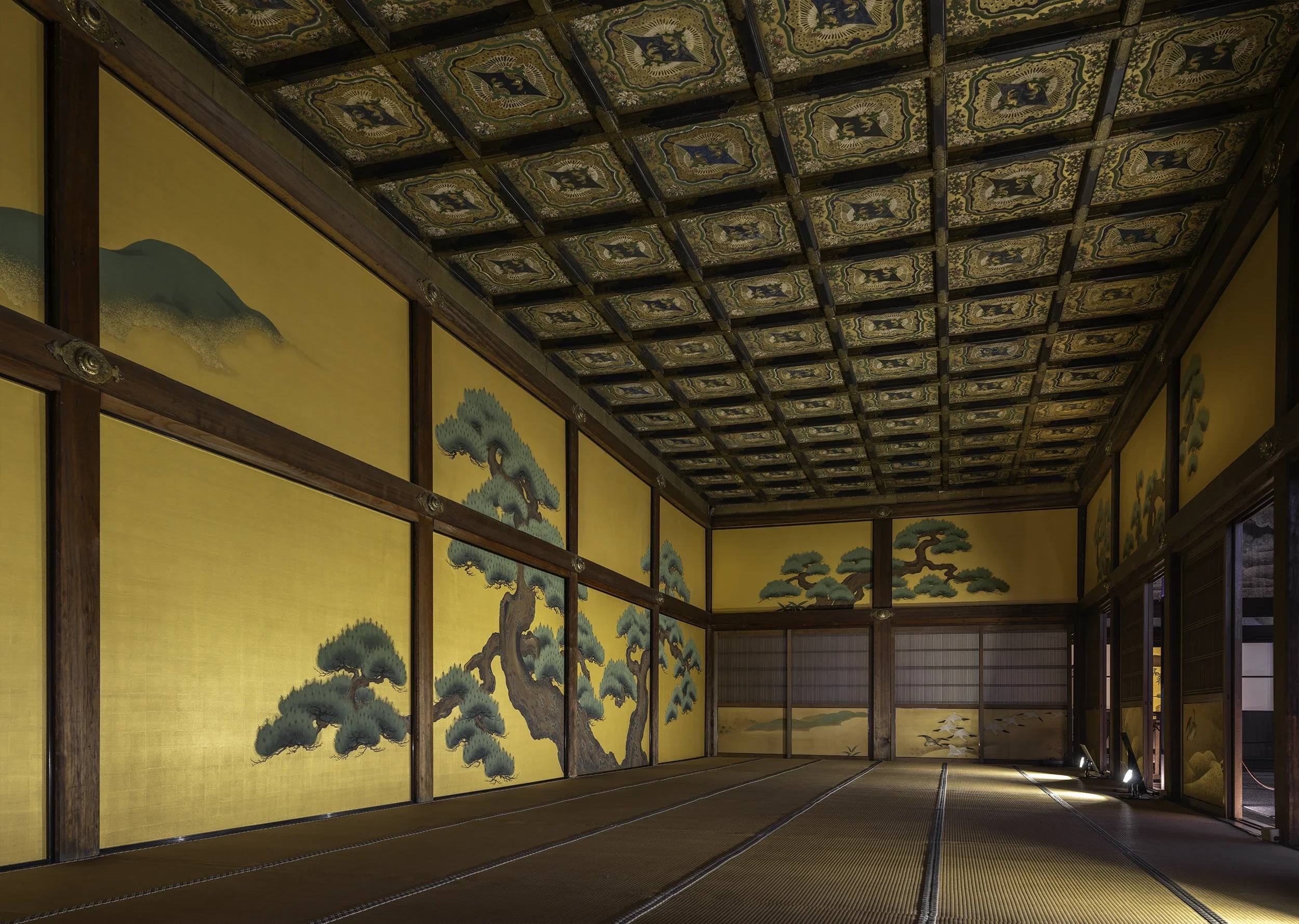
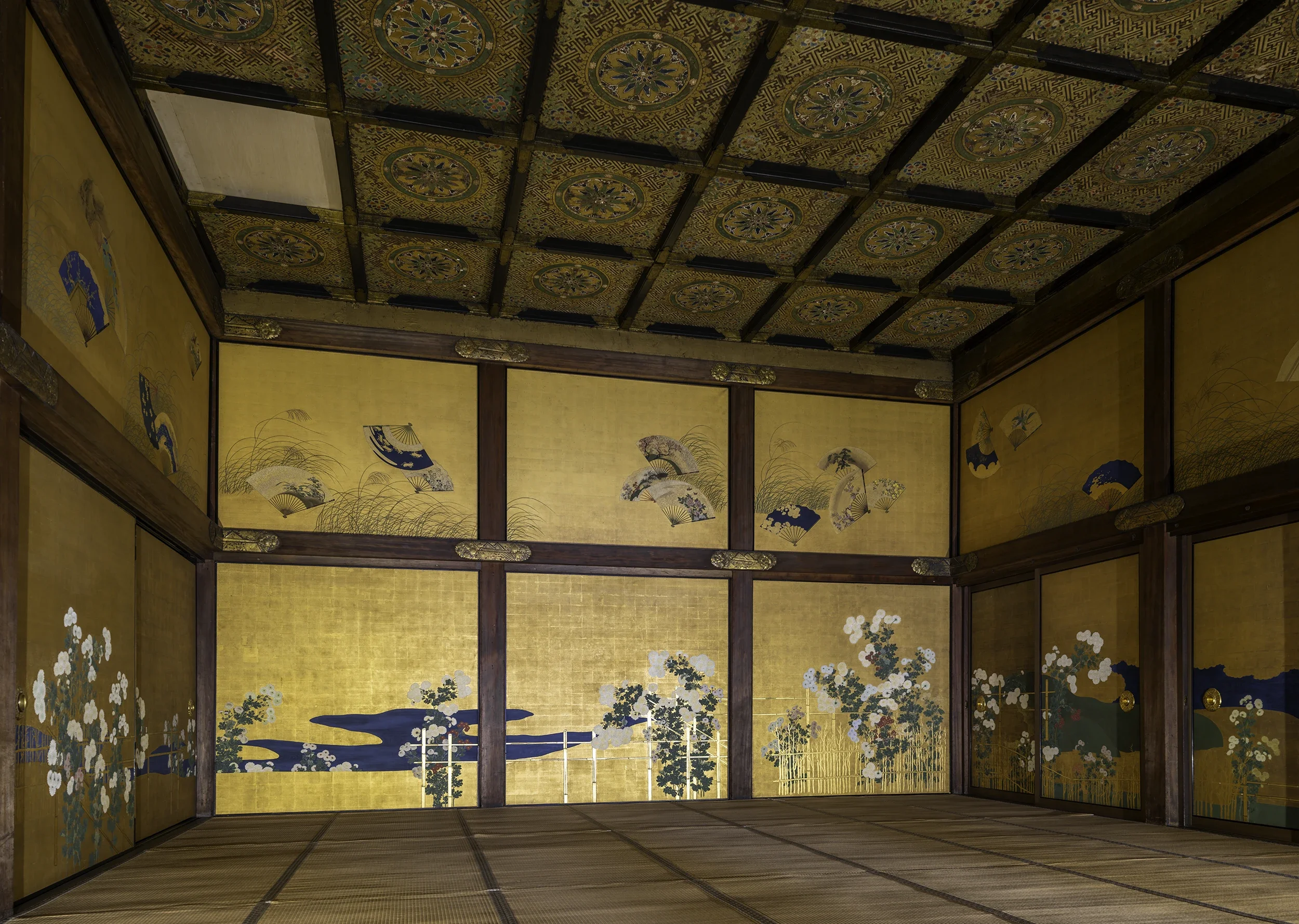
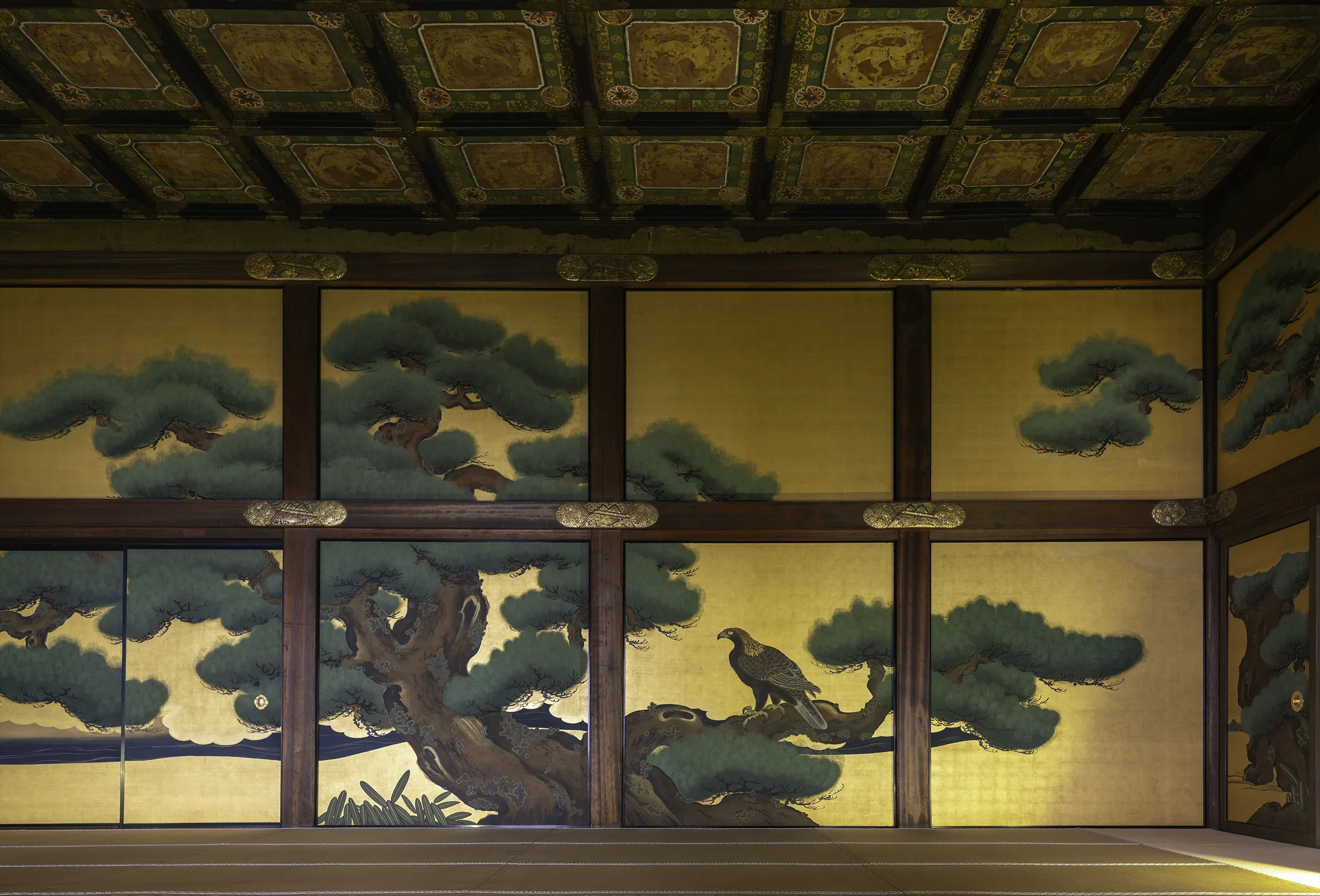
The interiors are decorated with monumental paintings created by artists of the renowned Kano School, one of Japan's most influential artistic traditions. Tigers, pine trees, bamboo, and golden landscapes cover the sliding doors (fusuma), creating an atmosphere that is both magnificent and intimidating.
These images were carefully chosen. Tigers symbolize strength and authority, while pine trees represent longevity, stability, and enduring power.
Every detail contributes to a carefully orchestrated visual language of political authority.
The "Nightingale Floors"
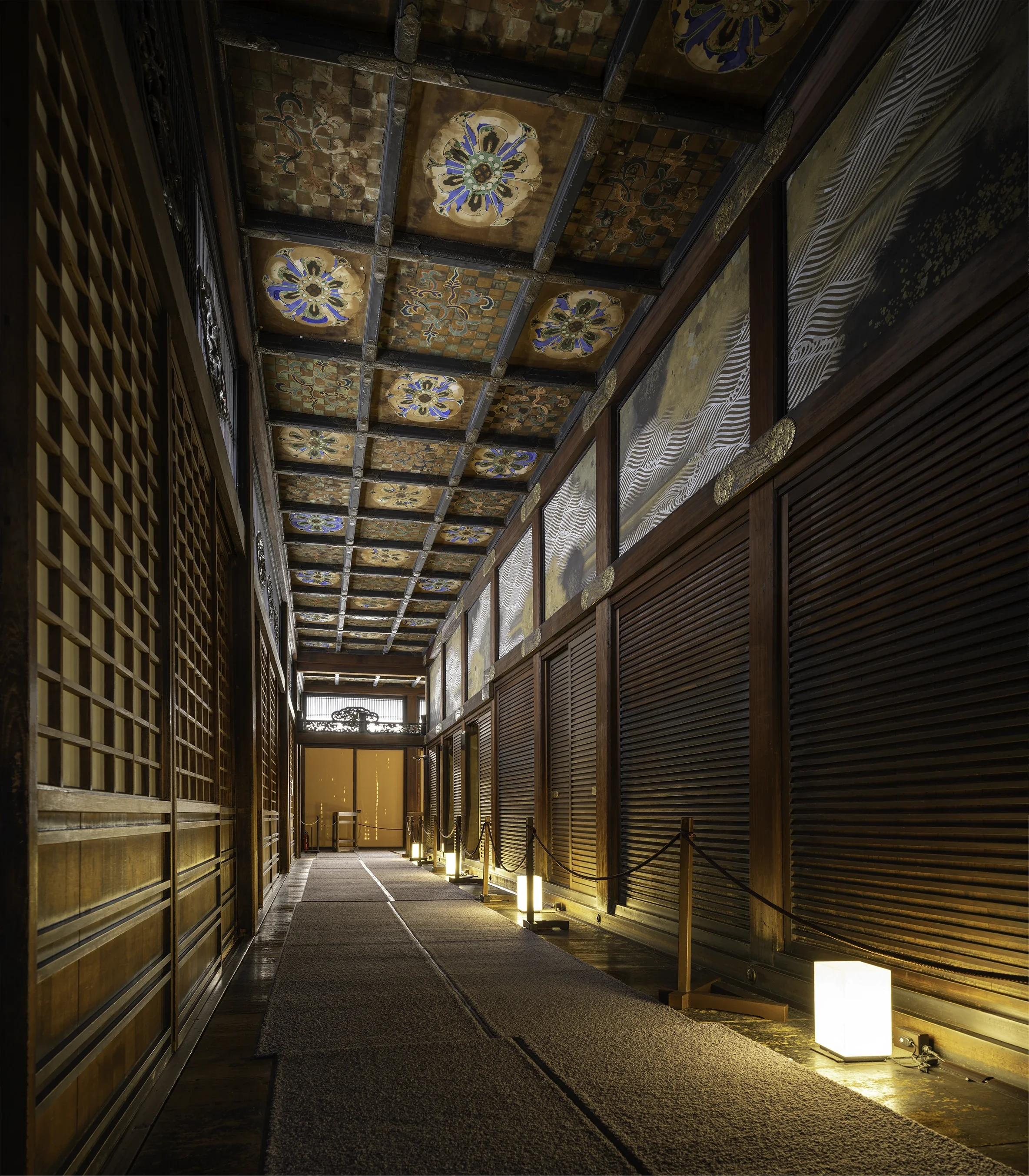
Among the palace's most famous features are its so-called "nightingale floors," known in Japanese as uguisubari.
Designed as an ingenious security system, these wooden floors emit a distinctive chirping sound whenever someone walks across them. Their song resembles that of the Japanese bush warbler, giving them their poetic name.
The system made it virtually impossible for intruders or would-be assassins to move silently through the palace.
Beyond their practical purpose, however, the floors also shape the atmosphere of Ninomaru Palace. Every footstep echoes softly through the quiet corridors, creating the subtle sensation that every movement is noticed.
Gardens Designed as Living Landscapes
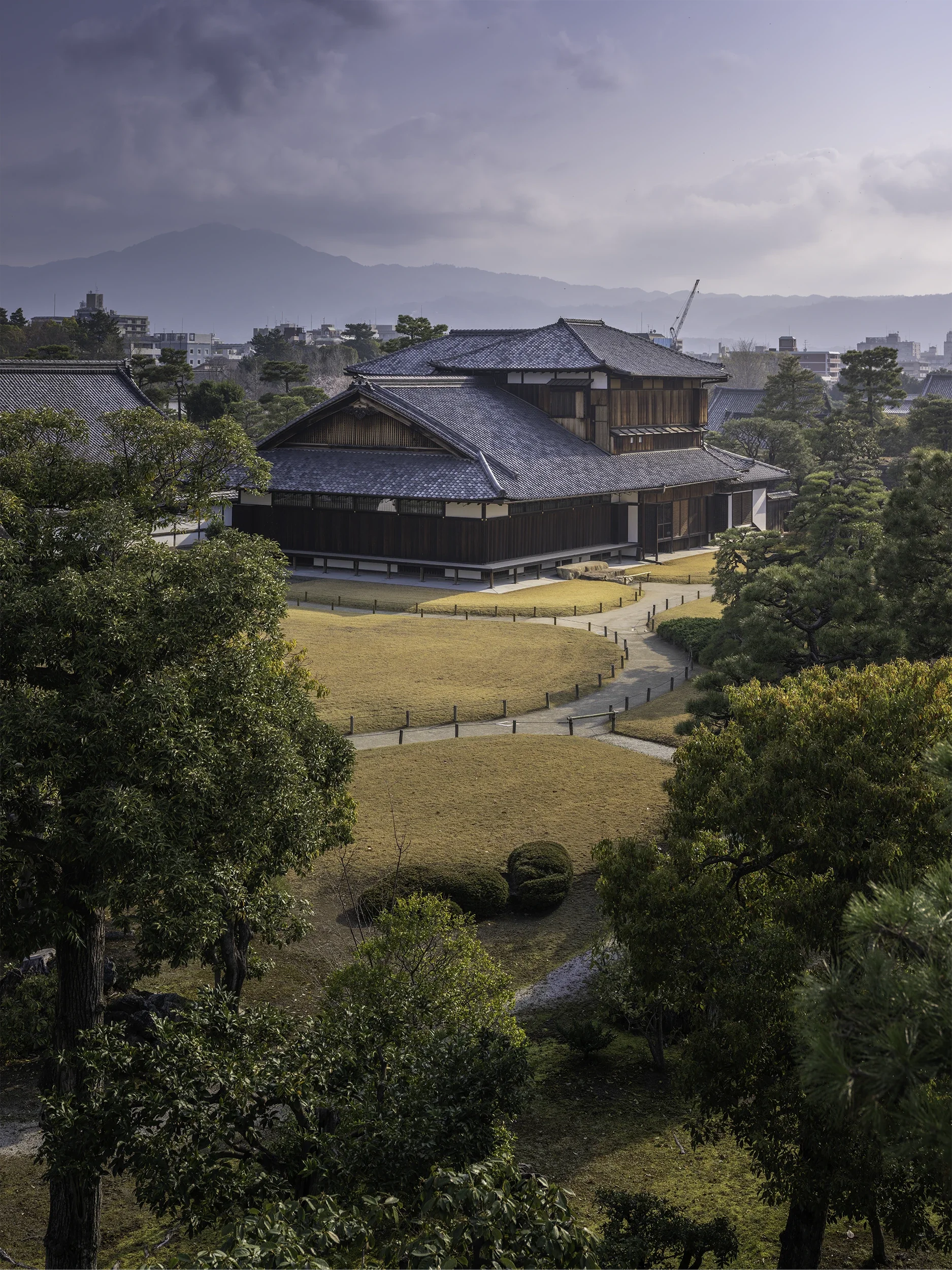
Surrounding the palace are several gardens created according to the principles of traditional Japanese landscape design.
The most celebrated is the Ninomaru Garden, traditionally attributed to the master landscape designer Kobori Enshū. Like many gardens of the early Edo period, it is organized around a large central pond.
Stone islands rise from the water, connected by discreet bridges. Carefully pruned pine trees, sculptural rocks, and thoughtfully composed perspectives recreate idealized natural landscapes in miniature.
These gardens were never intended merely as decoration. Instead, they were designed to be admired from inside the palace, functioning as living paintings viewed through the architecture.
The changing seasons play an essential role in their beauty, from spring cherry blossoms to brilliant autumn maples and the quiet reflections of winter.
A Castle Without a Keep
Unlike castles such as Himeji or Matsumoto, Nijo Castle no longer has a central keep.
One originally stood within the castle's inner enclosure.
Destroyed by fire during the 18th century, the keep was never rebuilt. This decision reflects the changing nature of the Edo period: once the era of civil wars had ended, imposing military fortifications became far less necessary.
Nijo Castle increasingly functioned as an administrative and ceremonial center rather than a defensive stronghold.
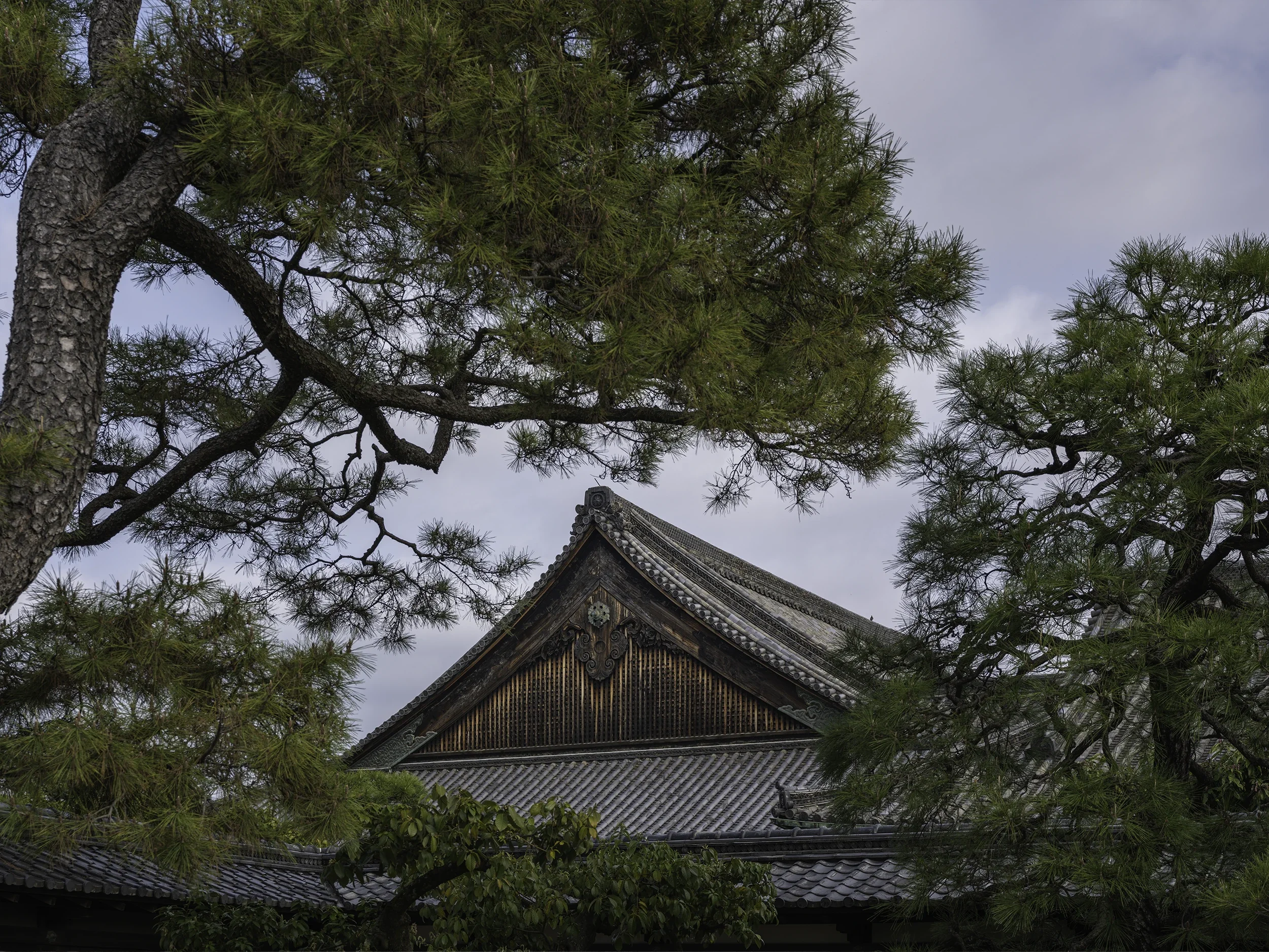
1867: The End of the Shogunate
One of the most significant moments in Japanese history took place at Nijo Castle in 1867.
That year, the fifteenth and final Tokugawa shogun, Tokugawa Yoshinobu, gathered the country's leading feudal lords inside Ninomaru Palace. During this historic meeting, he announced his decision to return political authority to the emperor.
This event, known as the Taisei Hōkan ("Restoration of Imperial Rule"), marked the official end of the Tokugawa Shogunate and paved the way for the Meiji Restoration.
Ironically, the very palace designed to demonstrate the shogun's supremacy became the place where that supremacy formally came to an end.
Few sites in Japan have witnessed a political event of such symbolic importance.
From Shogunal Residence to World Heritage Site
Following the Meiji Restoration, Nijo Castle came under the control of the Imperial Household before eventually being opened to the public during the 20th century.
In 1994, it was inscribed as a UNESCO World Heritage Site as part of the Historic Monuments of Ancient Kyoto.
This designation recognizes the castle's exceptional contribution to Japan's political, architectural, and cultural history.
Where Architecture Becomes History
What leaves the strongest impression on visitors to Nijo Castle is not the height of its walls or the strength of its fortifications.
Instead, it is the extraordinary subtlety with which architecture, gardens, and decoration communicate an entire political system.
The corridors direct movement according to social rank. The paintings reinforce the symbolic authority of the shogun. The gardens provide moments of contemplation that stand in deliberate contrast to the rigidity of court ceremony.
Every element has been carefully orchestrated to leave a lasting impression.
In this sense, Nijo Castle is a remarkable example of narrative architecture—a place where every building, room, and garden tells the story of political power in Japan.
Walking Through History
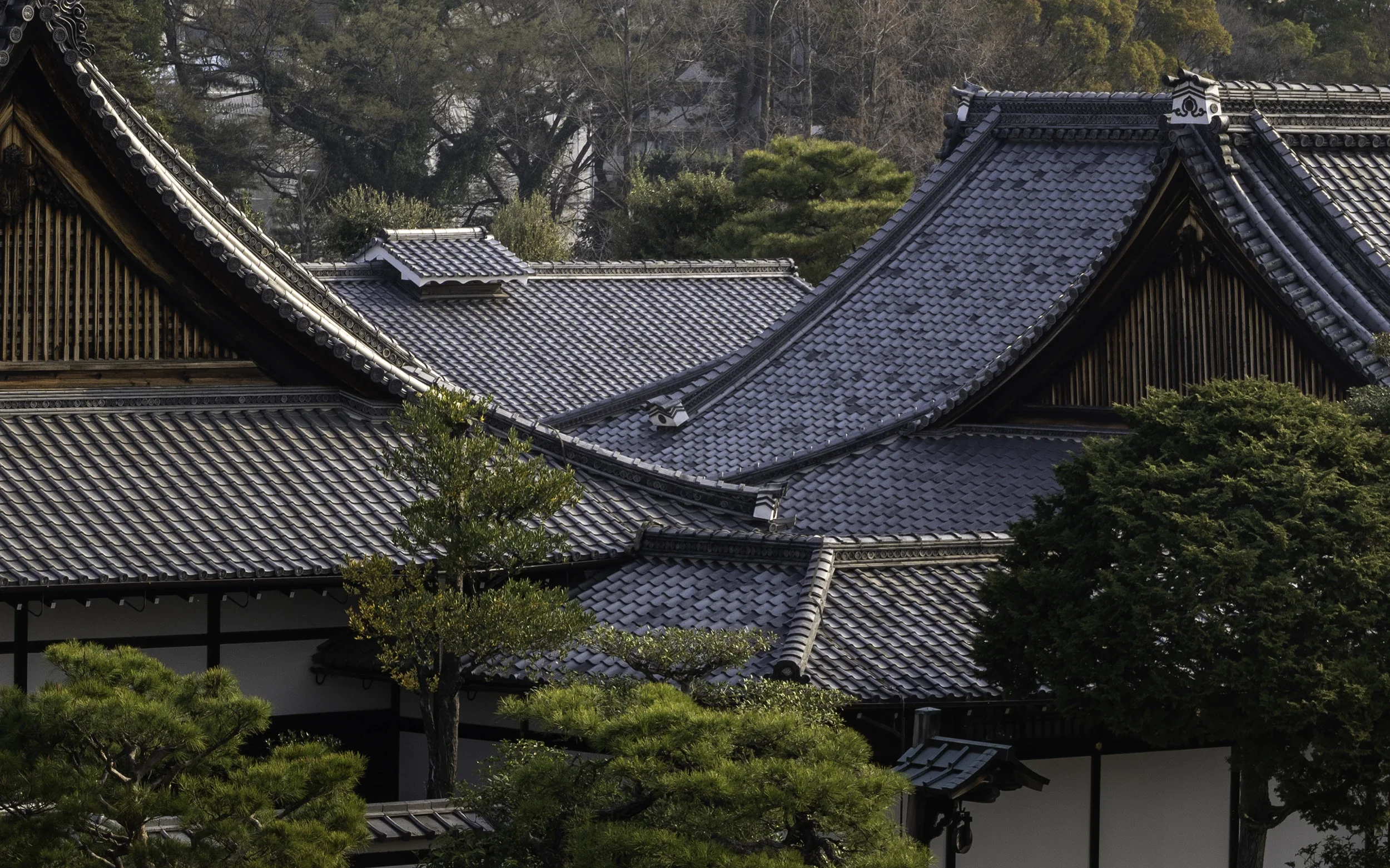
Today, walking through the corridors of Ninomaru Palace is like stepping into more than four centuries of Japanese history.
The nightingale floors still sing beneath each footstep. Golden screens continue to catch the changing light. The gardens quietly transform with the passing seasons.
Yet beyond its remarkable beauty, Nijo Castle remains a profoundly political place.
It was here that the shogun displayed his authority.
And it was here, too, that this authority ultimately came to an end.
In a city so often celebrated for its temples and tranquil gardens, Nijo Castle reminds us that Kyoto was also the stage upon which some of the most decisive chapters in Japanese history were written.